|
Tangkha Paintings
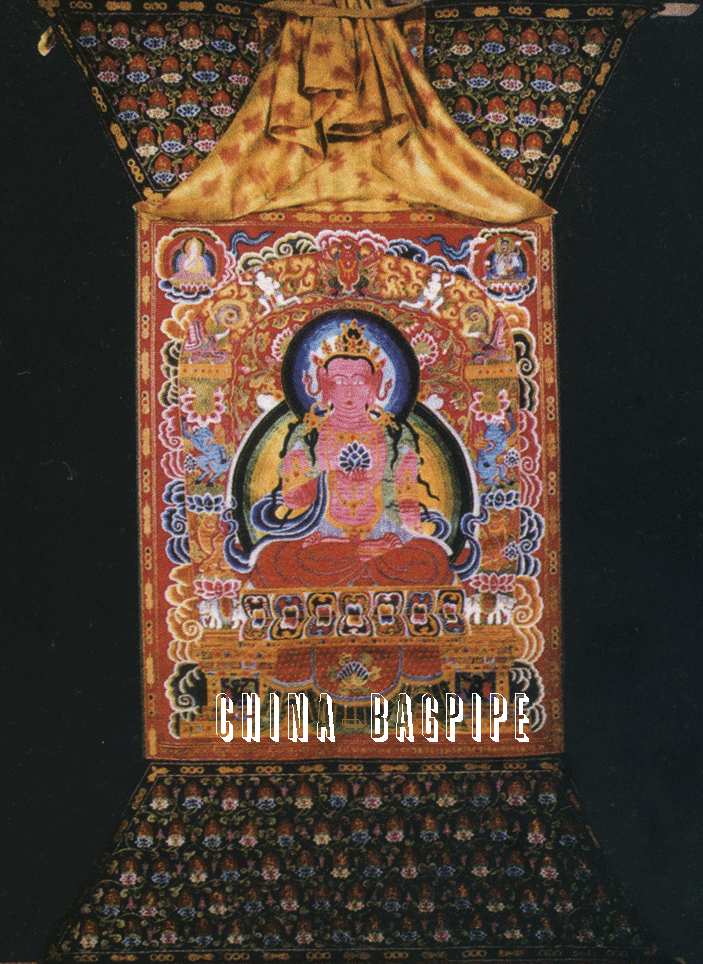
Thangka kept in the Potala Palace
Tangkha,
a transliteration of a Tibetan word, refers to a kind of
painting scroll mounted on dyed brocade. The tangkha
painting is one of two splendid gems of Tib-etan art along
with Tibetan-style murals. A tangkha is usually one metre
long, but the largest could extend for several dozen metres.
For their distinct ethnic flavour, heady religious aura,
and unique art style, tangkha has been cherished among the
Tibetans as treasures. These paintings cover a wide range of
themes, which fall into the following categories:
Mahasanghika school of tangkha painting. This school of tangkha
painting is dev-oted to Sakyamuni, Maitreya and the Eighteen
Arhats who are the main characters of the Mahasanghika sect
of Buddhism. Paintings devoted to this sect are found in
various temples in Tibet.
Esoteric School of tangkha painting. The figures portrayed by this
school of tan-gkha painting are mostly in grotesque and
ferocious images. Quite a few of the pain-tings feature two
figures that have their bodies intertwined.
Indian Adaptations of tangkha painting. In this school of tangkha
painting Buddhist sages are portrayed with their torso
naked and their body twisted, with slender waists and fat
hips. The facial expressions of the subjects are as a rule
calm and gentle.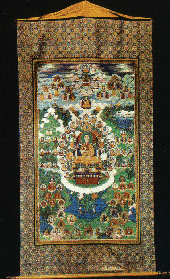
Goddess school of tangkha painting. In start contrast with the Han
tradition of Buddhism which is virtually devoid of female
deities, Tibetan Buddhism abounds in them. This give rise to
a school of tangkha painting devoted exclusively to
goddesses.
Apart from these four categories, there are also tangkha paintings
that are devoted to folklore, local habits and customs,
Tibetan medicine and historical tales.
The tangkha paintings can be hung up on walls, and thus they are
easy to be collected and stored. Such paintings can be done
on a variety of media, such as cloth, embroidery, tapestry
woven in fine silk and gold thread, and mosaic fashioned out
of pearls. Padded embroidery, however, is the most artistic
of all, as this school of tangkha painting is made by
patching up hundreds or even thousands of pieces of brocade,
which is a combination of Han and Tibetan art. Pearl mosaic
tangkhas are a rarity anywhere in this world.
|



 Chengdu
/ Beijing
Chengdu
/ Beijing Lasha
/ ShangRi-La
Lasha
/ ShangRi-La